
A project overview 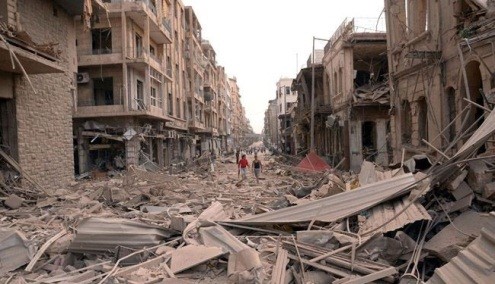
Since 2011, and as a result of conflicts and wars between many parties in the Republic of Yemen many public and private buildings and citizens houses in all parts of Yemen have been destroyed totally or partially . These events caused many bad effects on the life of citizens economically and healthily and raised the rate of poverty and the need for shelter . Till now, there is no any entity or establishment carried out a study and a survey to find out and assess all the damages scientifically and systemically. The government should provide adequate shelters as it was adopted in the Second United Nations Conference on Human Settlements held in Istanbul , Turkey 1996, and approved by the General Assembly.
In that conference they reaffirmed their commitment to the full and progressive realization of the right to adequate housing as provided for in international instruments. To that end, they shall seek the active participation of public, private and non-governmental partners at all levels to ensure, adequate housing for all persons and their families. As a result of natural and human-made disasters in many regions of the world the shelter crisis is aggravating. This requires from all parties at all levels to highlight the need for speedy solutions to the problem on a durable basis.
We , in Diaran, have charged ourselves with a mission to hold ourselves accountable to take typical steps working with concerned parties to reduce and minimize the burden and the suffering of people .The work is based on cooperative ,inclusive and common vision to reach to the goals of reconstruction project and introduce a successful experience in this field.
1-1 Our vision for reconstruction process
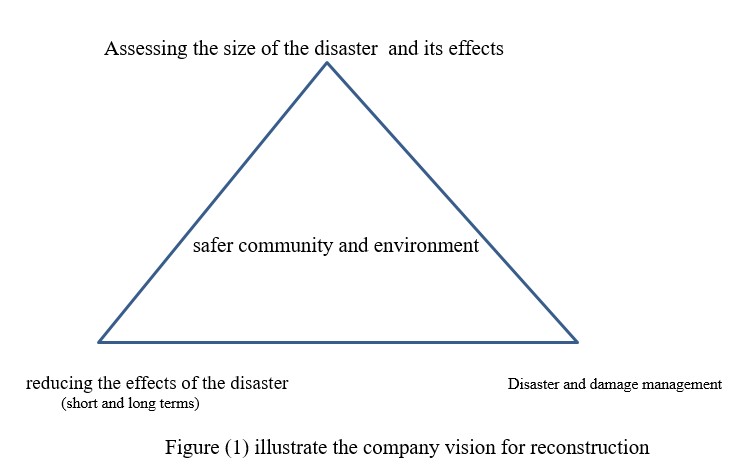
Our vision in the company to establish safer community and urban environment. It is based on three dimensions; assessing the size of the disaster and its effects, reducing the effects of the disaster and managing the disaster and the damages as it is illustrated in figure (1).
1-2 Our Aspirations
Adopting a vision for reconstruction and development that will be best illustration of having hope and working to achieve better life.
1-3 Our Goals
Diarna aims from this project to assess the present and future damages to rebuild and reconstruct.
The process consists of three phases as it is illustrated in figure (2).

1-4 Strategic goals of the Reconstruction Project
Diarna aims to participate actively to reconstruct and rebuild what have been destroyed due to the conflicts and wars in Yemen, with the aim of reforming and designing the urban environment on all parts of Yemen. The strategic vision of the company is based on the following three phases:
Qualifying the workforce; through qualifying the companies and the specialized bodies and educating the public about the phases of reconstruction.
- Active participation in the process of reconstruction through preparing strategic studies and adopting the management of the reconstruction phases actively .
- Active participation in the executive process of reconstruction.
The following figure illustrates the phases of the strategic objectives.

1-5 Detailed Objectives
The detailed objectives are the following :
- Identifying the relief requirements to minimize and reduce the effects of the disaster Providing data base to the national authorities in order to facilitate the solutions for reconstruction .
- Providing detailed analyses of the destructions and damages in order to have a clear data base and classifying the damages .
- Finding out the urgent requirement in order to aid the displaced people.
- Training local groups in order to have similar surveys when they are required in other areas of the country .
- Revising and documenting the right of the citizens by recording names of the owners of the properties and houses ,the location ,the size and the type of damage ,its degree and the cost of rehabilitating the building .
- Identifying the exact cost of reconstructing in a scientific approach .
- Surveying and documenting the damages which helps in starting the process of planning reconstruction because they provide data about the number of destroyed buildings either totally or partially and this helps the concerned parties in making correct decisions about the reconstruction process.


